
Hillside Tram Installation in Seattle

We install custom hillside trams for steep lots, hillside homes and waterfront properties across Seattle and Puget Sound, including Mercer Island, Lake Washington, West Seattle and Magnolia.

Installing a Hillside Tram on Your Seattle Property

Seattle Elevator Company is a veteran-owned local team that designs, installs and services hillside trams. If your home sits above the street, the water or the rest of your yard, a tram gives you a safe, seated ride between levels instead of a long climb on wet stairs.

We handle the whole project: the site visit, engineering, permits, installation and ongoing service. Every track is built to follow your slope and to hold up to Pacific Northwest weather.

What a Typical Installation Includes

A Track Built for Your Slope

Rails that follow straight, stepped or graded hillsides, from the street down to a dock or lower entrance.

Battery Backup & Safety Systems

Battery backup for power outages, obstruction sensors, safety brakes and key-controlled access.

Built for Seattle Weather

Sealed motors, corrosion-resistant parts and finishes rated for year-round rain and moisture.

Permits & Inspections Handled

Installed to Washington State rules, Seattle building codes and ASME A17.1. We pull the permits and schedule the inspection.

Recent Hillside Tram Projects in Seattle

Take a look at some of our recent projects around Seattle and Puget Sound, from waterfront trams on Mercer Island and Lake Washington to bluff-top installs in West Seattle, Magnolia and the Issaquah Highlands.

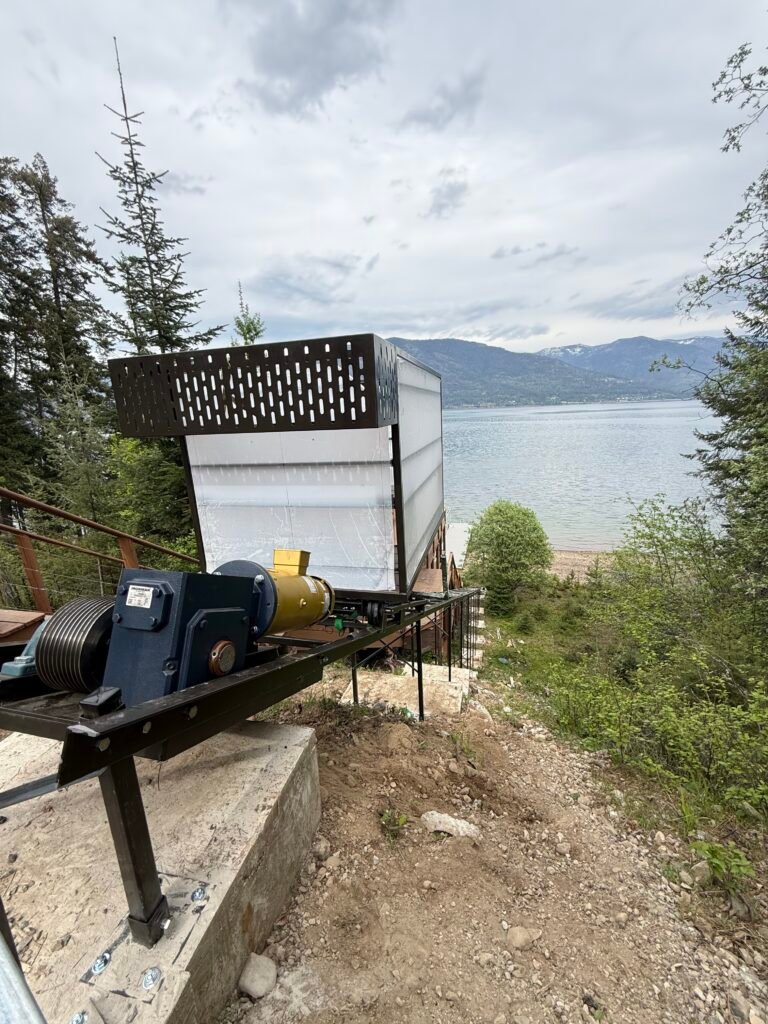
recent hillside tram installation
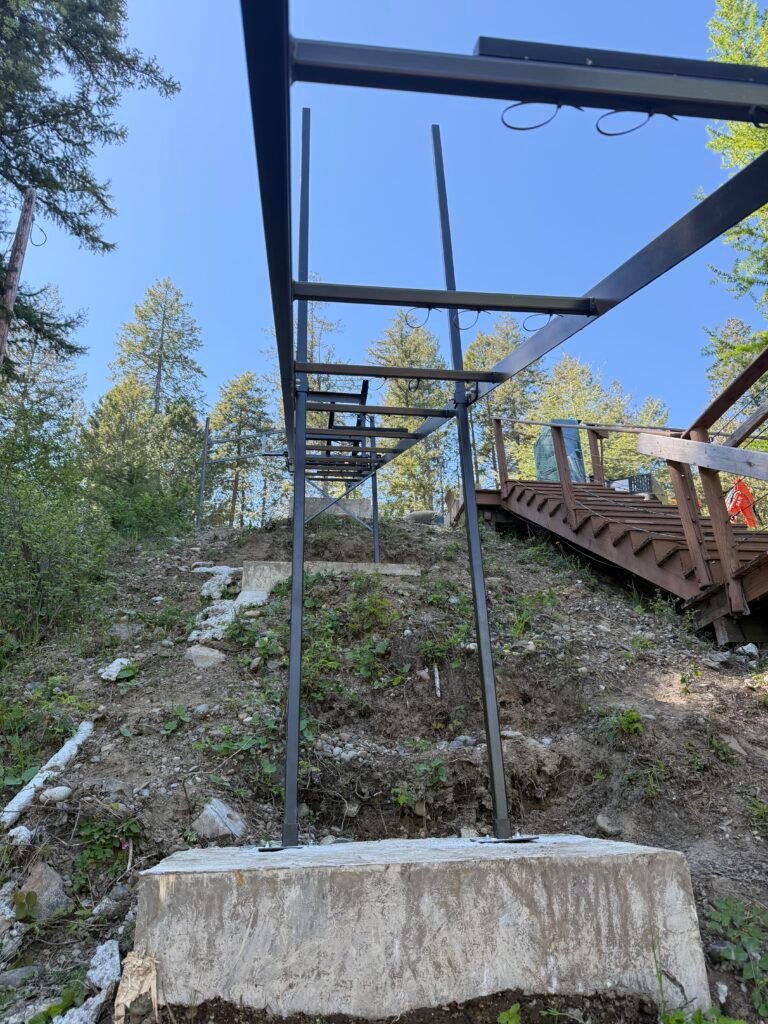
hillside tram installation in seattle washington
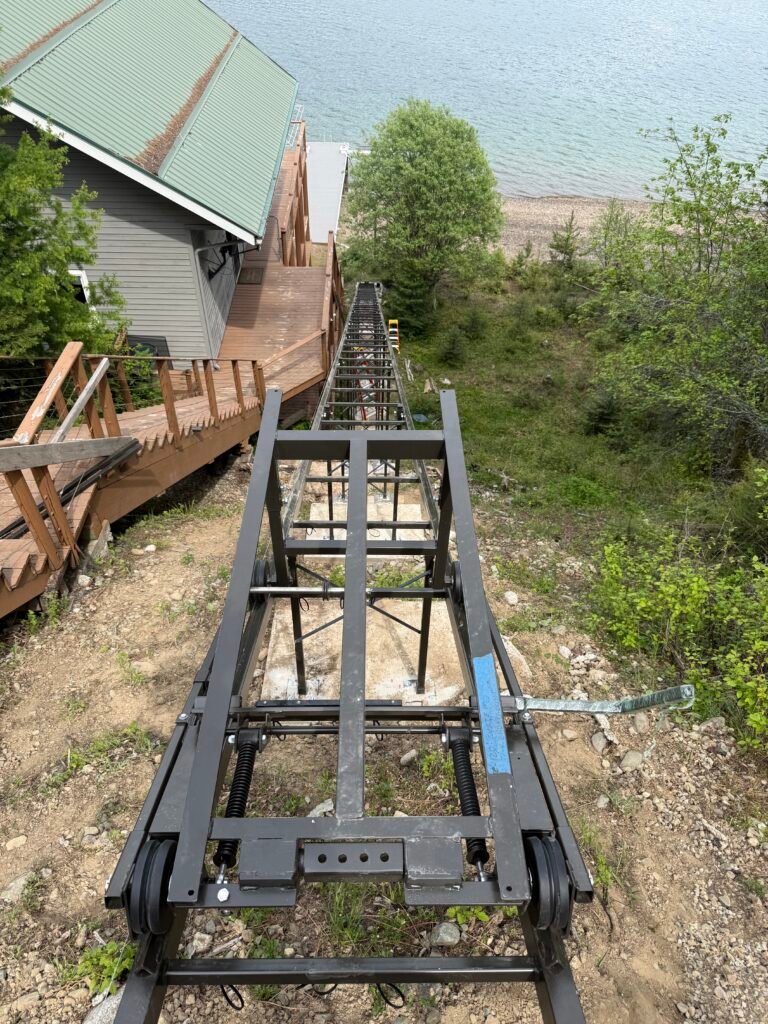
top-down view of hillside tram in seattle
Lakefront & waterfront

We Install Lakeside and Waterfront Trams in Seattle

On lake and Sound properties, the hard part is usually the bluff between the house and the water. A lakeside tram runs on a track that follows your slope from an upper landing down to the dock, beach or boathouse, so you can bring down groceries, kayaks, coolers and guests without the stairs.

  • Dock and beach access. The lower landing can sit at the bottom of the slope or right at the dock.
  • Built for shoreline grades. Engineered foundations step with the hillside, so uneven ground near the water isn't a problem.
  • Shoreline review planned for. Waterfront projects can need shoreline or critical-areas review. We plan for it from the first site visit.

See a full lakefront install in our hillside lift photo gallery and the lake house tram project.

Choosing the right setup

Hillside Tram, Incline Lift or Trolley? We'll Help You Choose

Hillside tram, incline lift, inclined elevator and hillside trolley all describe the same machine. What actually changes from one property to the next is the setup: an open car or an enclosed cab, one lower landing or several, a straight track or one with a bend.

On your site visit we walk the slope with you and recommend the setup that fits how you'll use it. If your slope is short, an outdoor stairlift may be the better fit, and we'll tell you so. Compare the two in hillside tram vs. outdoor stairlift.
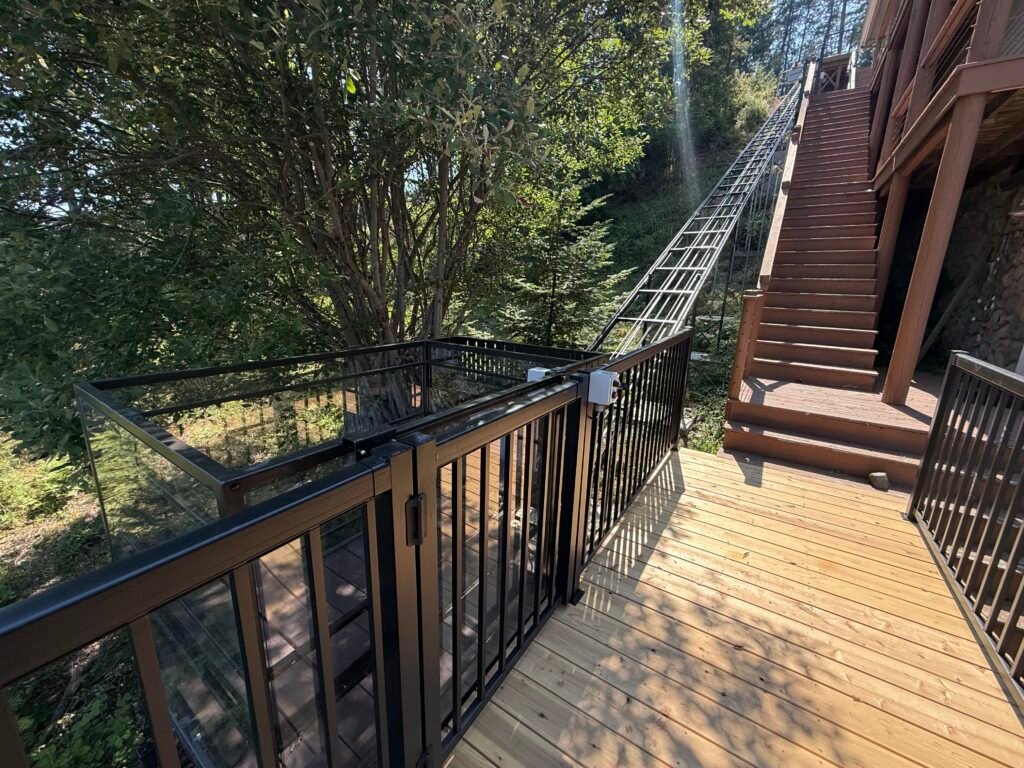
Hillside trolley installed on the side of a lake house
2026 pricing

What a Hillside Tram Will Typically Cost You

Track length drives the price more than anything else. Typical installed ranges in the Seattle area:

$80K–$120K
Short, straight run, up to about 30 ft of track
$120K–$180K
Medium run or steeper grade, about 30–75 ft
$180K–$300K+
Long or complex run, 75 ft+, curves or tight access

Planning ranges, not a quote. See the full hillside tram cost guide or price your project with the hillside trolley cost calculator.

Ready to Reclaim Your Hillside?

Request a free, no-obligation on-site consultation for your hillside tram project in Seattle or the Puget Sound area. Whether you need everyday access to a waterfront dock, a lower-level entrance, or a garage at the top of a steep lot, our local team will evaluate your slope, provide clear pricing, and guide you through every step — from design and permitting to professional installation and ongoing service.

We make the entire process fast, transparent, and stress-free so you can enjoy safe, easy access to every part of your property for years to come.

Location
Proudly serving Seattle.

Phone (206) 293-3050

Mon-Fri 8am-6pm CST

Email
clayton@seattleelevatorco.com

Common Questions

Top Questions We Get About Hillside Trams and Installation

Cost, slope, weather and permitting for inclined elevators on Seattle’s steep and waterfront lots.

How much does a hillside tram cost?

Track length is the single biggest driver — figure roughly $2,500 to $4,500 per linear foot once the car, foundation and installation are counted. In practice that means about $80,000–$120,000 for a short straight run, $120,000–$180,000 for the 30–75 foot runs most Seattle hillside lots need, and $180,000–$300,000+ for long or complex track.

You can model your own slope with our hillside trolley cost calculator.

How steep a slope can a tram handle?

The track is built to follow your grade rather than the other way around, so steepness is rarely the deciding factor. Irregular ground is handled with a multi-section track that changes pitch along the run — which is exactly the situation on most bluff and shoreline lots here.

What we're really assessing at survey is soil, access for equipment, and where the foundations can land.

Do hillside trams hold up in Pacific Northwest weather?

They have to, so they're specified for it: sealed drive components, weather-rated controls and enclosures, and corrosion-resistant fixings on saltwater-adjacent properties.

The detail that matters most is drainage. We plan where water goes at survey, because standing water around a foundation or drive is what actually shortens the life of an outdoor system here.

What happens in a power outage?

Trams are specified with battery backup so a car in transit can complete its run and return to a landing rather than stopping partway down a slope. Systems also include a controlled manual means of bringing the car down.

Worth taking seriously on a waterfront lot where the tram is the only practical route between the house and the dock.

Do I need a permit, and does shoreline regulation apply?

Yes to permitting. On waterfront and bluff properties there may also be shoreline or critical-areas review depending on where the track sits relative to the water and the slope, which is worth finding out early because it affects the schedule more than the budget.

We handle the permitting and coordinate the reviews as part of the project.

When does a tram make more sense than stairs or an elevator?

When the hard part of getting around your property is outside. An interior elevator does nothing for a hundred feet of exterior steps down to a dock, and outdoor stairs stop working the moment carrying anything — or anyone's knees — becomes the issue.

For some properties the honest recommendation is a tram and no elevator at all. Our tram cost guide goes deeper on the trade-off.

Can a tram take us all the way down to our dock?

Usually, yes. The lower landing goes wherever the track can safely end, which on most lakefront lots means at or near the dock approach or the beach. We confirm landing locations, clearances and any shoreline review during your free site visit.

Got a slope you would like us to look at?

Request a Free Estimate

Residential Partners