
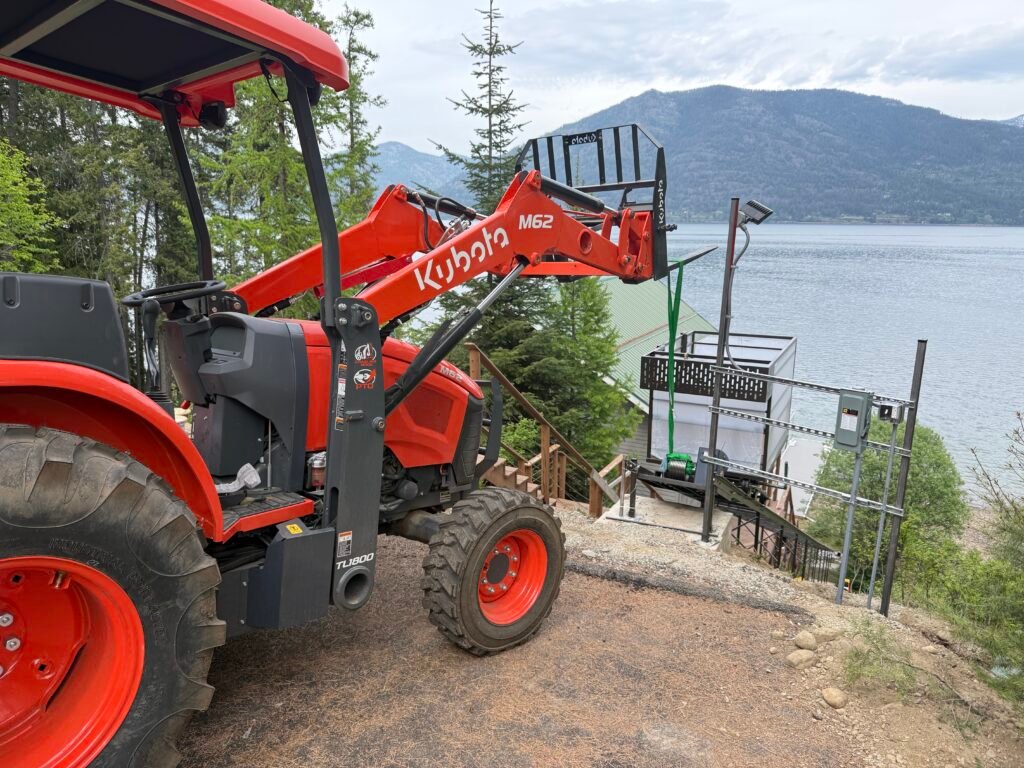
Seattle's hills and waterfront lots are beautiful — until you're hauling groceries up forty exterior steps or worrying about a loved one navigating a wet, sloped path. Two solutions solve outdoor access: a hillside tram (inclined elevator) and an outdoor stairlift. They look similar at a glance, but they fit very different situations.
At Seattle Elevator Co., we install both across the Puget Sound. Here's how to decide which is right for your slope.
The Quick Answer
- Choose an outdoor stairlift when you already have a usable exterior staircase, need a budget-friendly solution, and mainly need to carry one person up and down.
- Choose a hillside tram when the grade is long or steep, there's no practical staircase, or you need to carry more than one person plus cargo, garden equipment, or a wheelchair.
Side-by-Side Comparison
| Factor | Outdoor Stairlift | Hillside Tram (Inclined Elevator) |
|---|---|---|
| Typical installed cost | $6,000 – $11,000 (straight); more for curved | $20,000 – $120,000+ depending on run |
| Needs an existing staircase? | Yes — it mounts to your stairs | No — it runs on its own track |
| Best grade/length | Short to moderate stair runs | Long, steep, or irregular slopes |
| Capacity | One rider, ~300–400 lbs | Multiple passengers, cargo, or a wheelchair |
| Carries groceries/equipment? | Limited | Yes — a key advantage |
| Install footprint | Minimal; attaches to existing stairs | Engineered track and footings on the slope |
When an Outdoor Stairlift Wins
If you have a sound exterior staircase — a common setup on Capitol Hill walk-ups, split-level entries, and porch or deck access — an outdoor stairlift is fast, affordable, and minimally invasive. Weather-resistant models with sealed motors and covers stand up well to Pacific Northwest rain. Most straight units install in a single day. Learn more on our stairlift installation page.
When a Hillside Tram Wins
If your access challenge is the slope itself — a bluff down to a Lake Washington dock, a long climb from a street-level garage, or a hillside garden — a tram is usually the only practical answer. It runs on its own engineered track rather than relying on stairs, carries far more weight, and handles much longer runs. It's a larger investment, but it solves problems a stairlift simply can't. See our hillside tram installation service and our tram cost guide for budgeting.
Four Questions That Decide It
- Do you have a usable exterior staircase? If yes, a stairlift is on the table. If not, lean tram.
- How long and steep is the run? Short stair runs favor a stairlift; long or steep grades favor a tram.
- What do you need to carry? Just yourself — stairlift. Groceries, gear, a second person, or a wheelchair — tram.
- What's your budget? Stairlifts are a fraction of a tram's cost, but a tram delivers far more capability where the terrain demands it.
Not Sure Which Fits? We'll Tell You Straight
Sometimes the answer is obvious on-site in five minutes; sometimes both could work and it comes down to budget and how you'll use it. Our veteran-owned local team will walk your property, lay out honest options, and never push you toward the pricier solution if you don't need it.
Request a free on-site consultation or call (206) 293-3050.
Frequently Asked Questions
Can I put an outdoor stairlift on a hillside path with no stairs?
No. Stairlifts mount to an existing staircase. For a sloped path or open hillside, you'll want a hillside tram, which runs on its own track.
Is a hillside tram worth it over a stairlift?
It is when the terrain demands it — long runs, steep grades, or the need to carry cargo or a wheelchair. For a short existing staircase, a stairlift is the more sensible spend.
Do both work in Seattle's wet climate?
Yes. We install weather-resistant outdoor stairlifts and trams built with sealed components and corrosion-resistant materials for year-round Pacific Northwest conditions.
Last updated: June 2026 | Seattle Elevator Co. — Serving Seattle, Bellevue, Mercer Island, and the Greater Puget Sound Area