
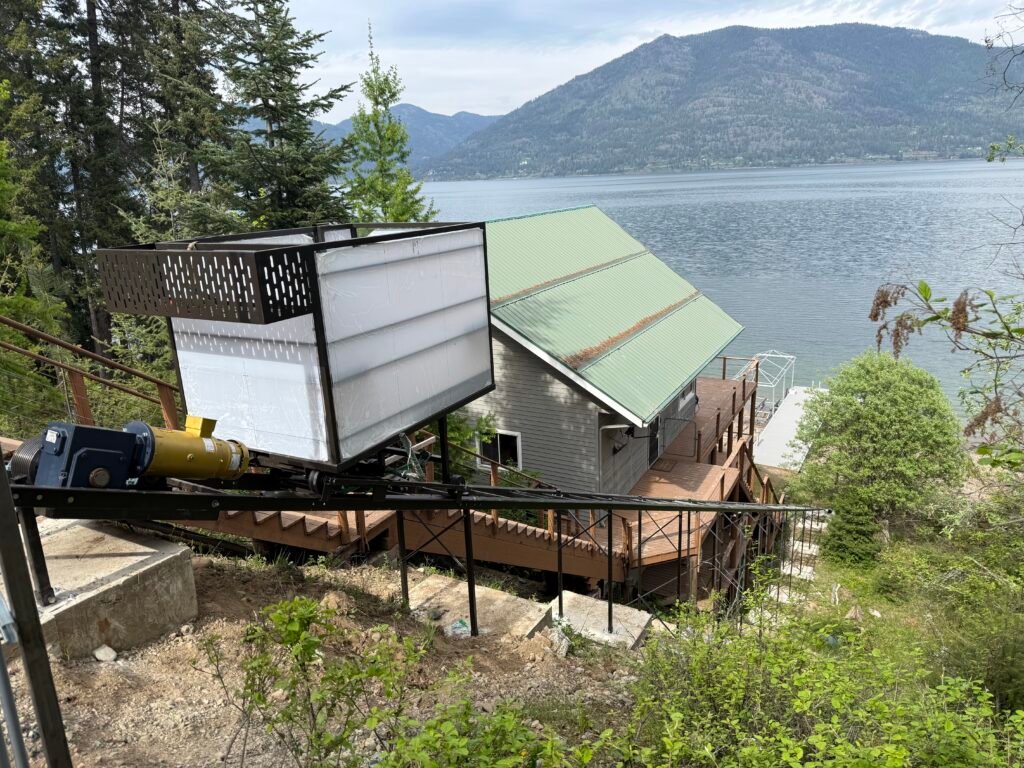
If your Seattle home sits on a bluff, a steep slope, or a waterfront lot, a hillside tram — also called an inclined elevator or outdoor incline lift — can turn an exhausting climb into an easy, everyday ride. The first question almost every homeowner asks is simple: how much does a hillside tram cost in Seattle?
At Seattle Elevator Co., we design and install custom trams across the Puget Sound, from Mercer Island and Lake Washington shorelines to bluff-top homes in West Seattle and Magnolia. Here’s an honest, up-to-date breakdown of what you can expect to pay in 2026 and what drives the final number.
Average Hillside Tram Cost in Seattle (2026)
Because every tram is built to fit a specific slope, pricing varies more than a stairlift or a standard home elevator. As a general guide, here’s what installed hillside trams tend to run in the Seattle area:
| Tram Type / Run | Typical Installed Range (2026) | Best For |
|---|---|---|
| Short, straight run (up to ~30 ft of track) | $80,000 – $120,000 | Modest slopes, single landing, one passenger car |
| Medium run / steeper grade (~30–75 ft) | $120,000 – $180,000 | Most hillside and bluff lots in Seattle |
| Long or complex run (75 ft+, curves, difficult access) | $180,000 – $300,000+ | Waterfront bluffs, multi-section track, large or cargo cars |
A useful rule of thumb: track length is the single biggest cost driver, and many residential trams land somewhere around $2,500–$4,500 per linear foot of track once you factor in the car, foundation, and installation. These figures are planning estimates only — the sole way to get an accurate price is an on-site evaluation of your slope.
What Affects the Cost of a Hillside Tram in Seattle?
- Track length: The longer the run from your upper landing to the dock, garage, or lower entrance, the more rail, support towers, and cable required.
- Slope and terrain: Steep, uneven, or rocky ground means more footings and engineering. Straight runs cost less than tracks that change angle.
- Soil and geotechnical work: Seattle’s hillsides and waterfront bluffs often require a geotechnical review and engineered foundations — a real factor in our region that flatland installs don’t face.
- Car size and capacity: A two-passenger car costs less than a larger platform built to carry groceries, garden equipment, or a wheelchair.
- Permits and inspections: Seattle (SDCI) conveyance permitting, engineering drawings, and required inspections add to the project.
- Site access: Tight, wooded, or waterfront lots that are hard to reach with materials and equipment add labor time.
- Weather protection and finishes: Canopies, upgraded weather sealing, and custom finishes for our damp climate raise the price but extend service life.
How a Tram Compares to Other Options
A hillside tram is a bigger investment than a stairlift, but it solves a problem the others can’t: long, steep outdoor grades where there may be no usable staircase at all. For a side-by-side look at when each makes sense, see our guide on choosing between a hillside tram and an outdoor stairlift. If your access challenge is inside the home rather than out on the slope, compare with home elevator costs in Seattle.
Ongoing Costs to Budget For
- Annual maintenance and safety service: Keeps the tram running safely and helps maintain its inspection certificate.
- Seasonal upkeep: Outdoor systems benefit from periodic cleaning and weather-seal checks in the Pacific Northwest.
- Electrical: Most trams run on standard residential power; older homes may need a dedicated circuit.
Why Choose Seattle Elevator Co. for Your Hillside Tram?
We’re a local, veteran-owned company that understands Seattle’s slopes, soils, waterfront access, and strict Washington codes. We handle the engineering, permitting, and installation from start to finish, and we stay with you for ongoing service.
Ready for an accurate number for your specific lot? Request a free on-site consultation or call (206) 293-3050. Learn more about our hillside tram installation service.
Frequently Asked Questions
How much does a hillside tram cost in Seattle?
Most residential hillside trams in the Seattle area run between $80,000 and $300,000+ installed, depending mainly on track length, slope, and site conditions. Short straight runs start lower; long waterfront-bluff runs reach the top of the range.
What’s the biggest factor in tram pricing?
Track length. The farther the car has to travel up or down your slope, the more rail, support structure, and labor the project requires.
Is a hillside tram cheaper than a home elevator?
It depends on the run. A short tram can cost less than a full home elevator, while a long, engineered waterfront tram can cost more. The right comparison is which one actually solves your access problem.
Last updated: June 2026 | Seattle Elevator Co. — Serving Seattle, Bellevue, Mercer Island, and the Greater Puget Sound Area