
Sleek, air-driven home elevators that install in days — no pit, no machine room, and minimal structural change. Ideal for Seattle’s older homes, tight floor plans, and multi-level properties across the Puget Sound.
A pneumatic vacuum elevator (PVE) moves its cab using nothing more than air pressure inside a self-supporting cylindrical tube — no cables, no counterweights, and no hydraulic pit. That simplicity is exactly why these elevators have become so popular in Seattle: they slip into homes where a traditional shaft-and-pit elevator simply won’t fit, from historic Capitol Hill and Queen Anne houses to compact Ballard and Fremont floor plans.
Our veteran-owned Seattle team designs and installs pneumatic vacuum elevators that are quiet, energy-efficient, and fully compliant with Washington State, Seattle building codes, and ASME A17.1 standards. Because there’s no machine room or deep pit required, installation is fast and far less disruptive — most projects are completed in a matter of days, not weeks.
No Pit or Machine Room Required
The self-contained tube is the shaft — no concrete pit, no separate equipment room, and no basement access needed. A perfect match for slab-built and space-tight Seattle homes.
Fast, Low-Disruption Installation
With no shaft to frame or pit to excavate, most pneumatic elevators install in just a few days with minimal mess and structural change to your home.
Panoramic, Space-Saving Design
The compact cylindrical cab has a footprint smaller than most closets and offers a 360-degree panoramic view — a striking, modern feature in any home.
Energy-Efficient & Code-Compliant
The system draws power only on the way up and descends on air pressure, keeping energy use low. Every installation meets Washington State, Seattle, and ASME A17.1 safety requirements, with a gentle automatic descent during power outages.
Explore recent pneumatic vacuum elevator projects completed throughout Greater Seattle and the Puget Sound region. From discreet single-passenger models tucked into historic Capitol Hill and Queen Anne homes to wheelchair-accessible cabs in modern Bellevue and Kirkland residences, each system is tailored to the home’s layout, the homeowner’s mobility needs, and our damp Pacific Northwest climate.
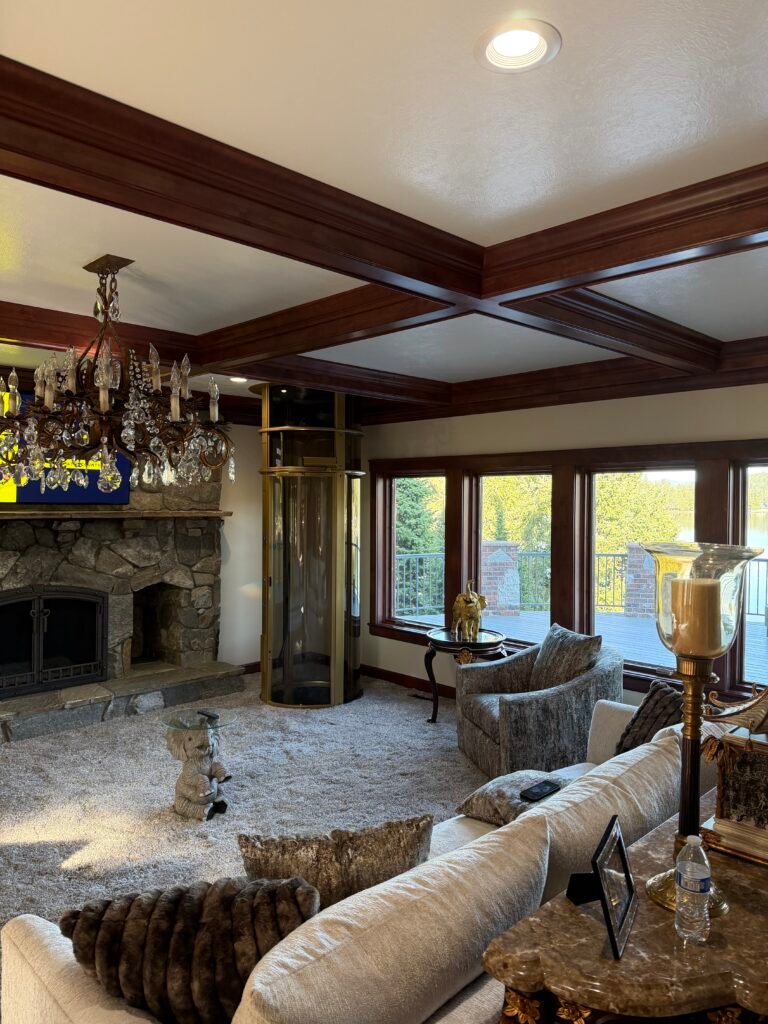
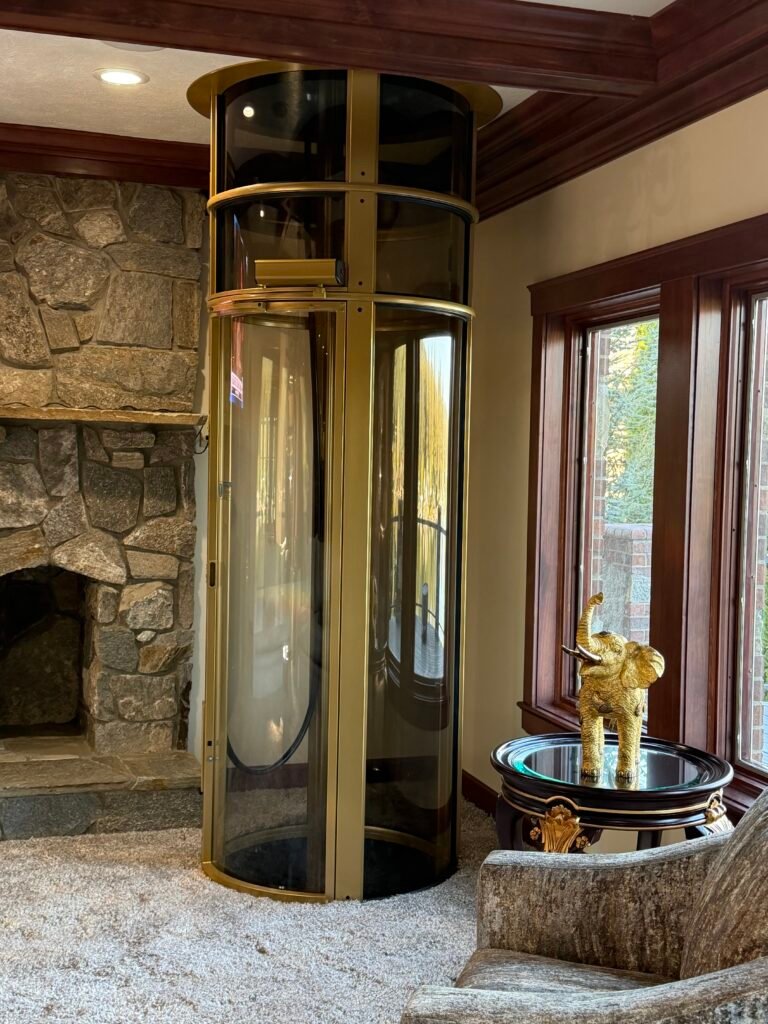
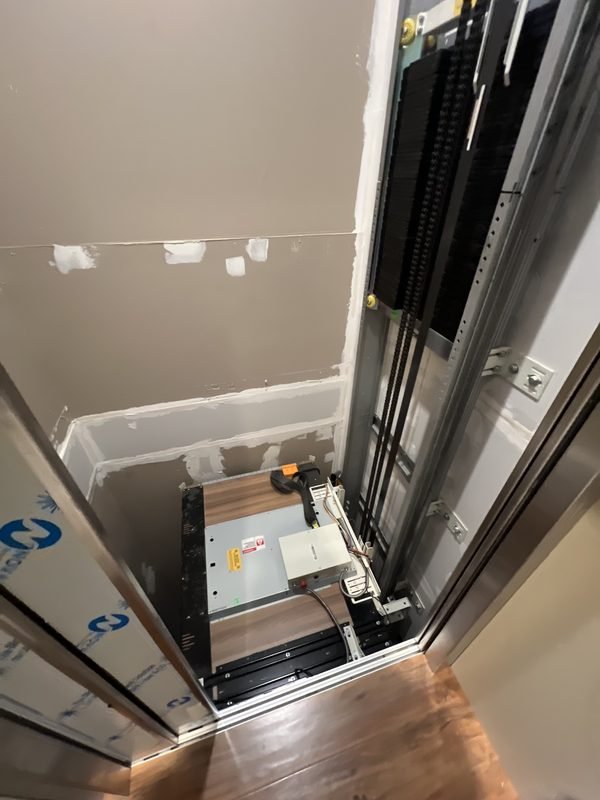
How an air-driven elevator actually works, what it removes from a conventional build, and where it fits in a Seattle home.
Air pressure. Turbines at the top of a sealed, self-supporting tube reduce the pressure above the cab to lift it, and a controlled release of air lowers it back down. There are no cables, no counterweights and no hydraulic ram.
That also means the descent uses no motor power — the elevator draws its electricity going up, not coming down.
Neither. The tube is self-supporting and sits on your existing floor, which is the whole reason these work in houses where a conventional elevator doesn't.
In budget terms it removes the $15,000 to $40,000 of shaft construction a conventional retrofit usually carries, along with most of the structural work around it.
We quote these per home rather than from a list, because the variable that usually decides the number on a conventional elevator — how much shaft and structure has to be built — largely disappears here.
The useful way to compare bids is total installed cost including construction, not equipment price. Our cost guide lays out what belongs in that comparison, and our estimates are free.
It depends on the tube diameter. Models range from a compact single-passenger cab up to a three-passenger cab large enough to take a wheelchair, with a mid-size two-passenger option in between.
The larger sizes need more floor area, so cab size and where it can go tend to get decided together.
Often, yes — it's one of the better answers when a basement is unusable, when the floor plan is tight, or when you'd rather not open up plaster and framing in a house worth keeping intact.
Our guide to adding an elevator to an older Seattle home covers how this compares with building a conventional shaft.
The turbines are audible while the cab is rising — most people compare it to a vacuum cleaner in another room — and it's notably quieter coming down, since it isn't running a motor to descend.
The turbine unit can be sited away from living space to reduce it further. If noise is a concern, say so early and we'll plan the location around it.
Not sure if the tube will fit your floor plan?
Request a Free EstimatePneumatic vacuum elevators are an excellent fit for many Seattle homes — though larger cabs or heavier capacities may call for a traditional hydraulic system instead. Request a free, no-obligation in-home consultation and our local team will walk your home, explain the options honestly, and recommend the right solution, whether that’s a pneumatic elevator, a traditional residential elevator, or a stairlift.
From design and permitting to professional installation and ongoing service, we make the entire process seamless, transparent, and stress-free.

Location
Proudly serving Seattle.

Phone (206) 293-3050
Mon-Fri 8am-6pm CST

Email
clayton@seattleelevatorco.com